
I went to Bruges last week and I couldn’t think.
Not in the distracted, jet-lagged, too-much-coffee way. In the way where there are so many people around you that the air itself feels claimed.
Every canal.
Every cobblestone. Every carefully preserved medieval corner — full.
Not with people experiencing the place, but with people photographing evidence that they were there.
Bruges is extraordinary. The bones of it are still there — you can feel what it must have been like to walk those streets when they belonged to the city rather than to the industry that grew up around the city.
That’s the thing that made it sad rather than just crowded. You weren’t standing in a place that had always been like this. You were standing in a place that had been transformed into a product of itself, slowly, completely, by the weight of its own reputation.
I waddled through the middle of it as fast as I could.
I found a bookshop called Bruggia Books and Coffee and I sat down and ordered something and stayed for an hour. The owners were there. We talked — about nothing consequential, about Dutch philosophers whose names I didn’t catch, about a book involving a panda that I nodded along to as if I knew exactly what they were referencing. I did not know what they were referencing. I had a wonderful time.
At some point I apologized. On behalf of my country. For the current situation. The way you apologize to someone’s house when something in it has been broken — not because you broke it, but because you were there and the apology needed to go somewhere.
They were gracious. More gracious than the situation deserved.
I bought chocolate at a place called Oliver’s, chosen specifically because it was the furthest from the main square I could locate without consulting a map. I got in an Uber back to the ship. Seventy-five euros. I did not hesitate.
Here is the thing I keep coming back to, a week later.
Bruges didn’t stop being beautiful. The architecture is still there. The canals are still there. The particular quality of light that made someone decide, centuries ago, that this was a place worth preserving — still there.
What’s gone is the ability to meet it.
There are too many of us wanting the same thing at the same time, and the wanting has become the thing itself. The photograph is the experience now. The proof of presence has replaced the presence.
I’ve been thinking about whether that happens to people too.
Not all at once. Gradually.
The way a career can accumulate so many expectations — from organizations, from colleagues, from the version of yourself you built over thirty years — that eventually you can no longer find the actual person inside the role. The role is fully occupied. There’s no room left for whatever was there before the role arrived.
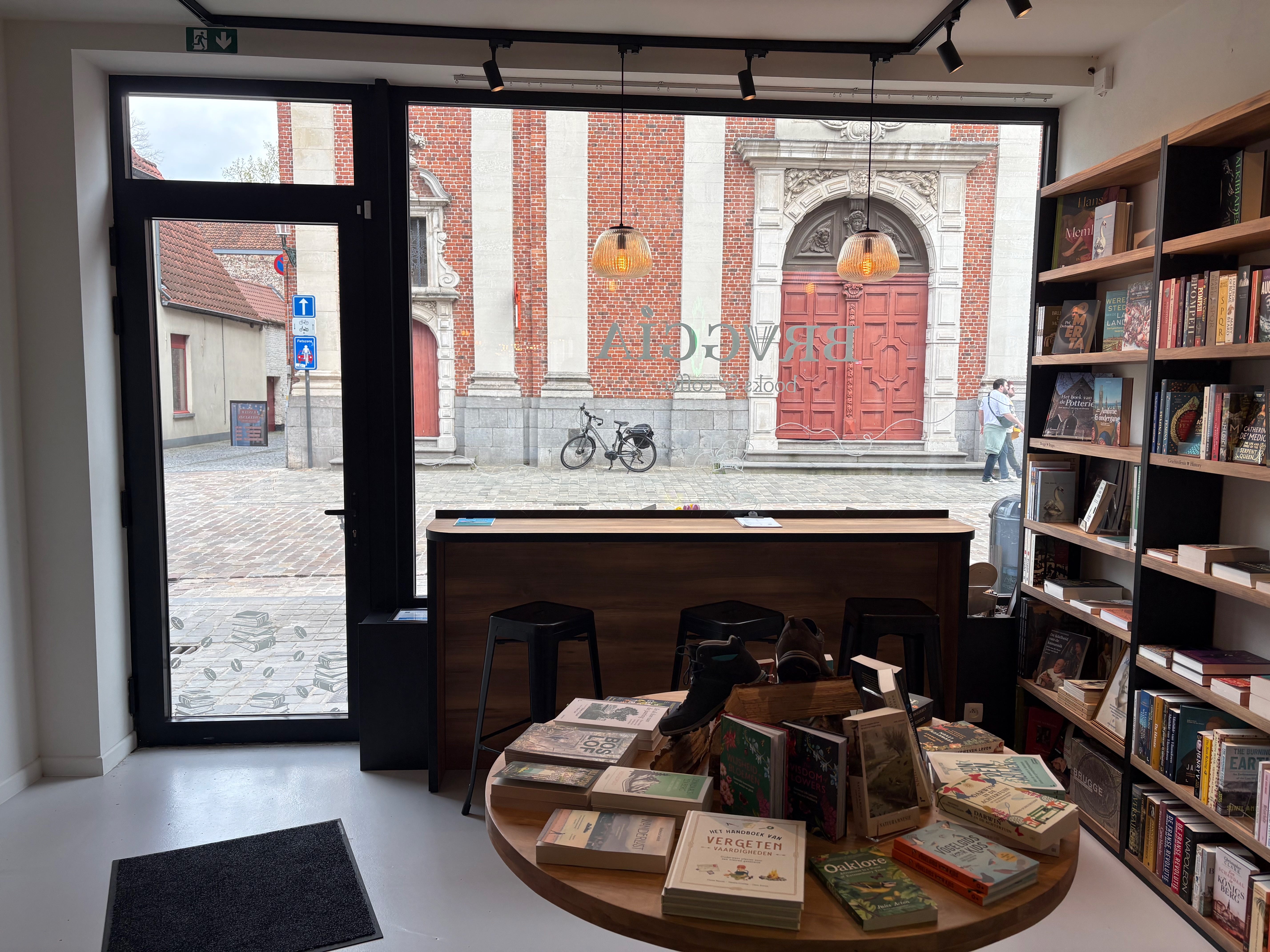
The bookshop was still there. Quiet, a little off the main path, owned by people who had apparently decided to stay in the place and keep something real alive inside it.
That takes a specific kind of stubbornness. The willingness to not become what everything around you is becoming.
I don’t know what the philosopher’s name was. I don’t know what the panda book was actually about. But I left that hour feeling more like myself than I had all day.
Sometimes that’s the whole point of leaving the house.