
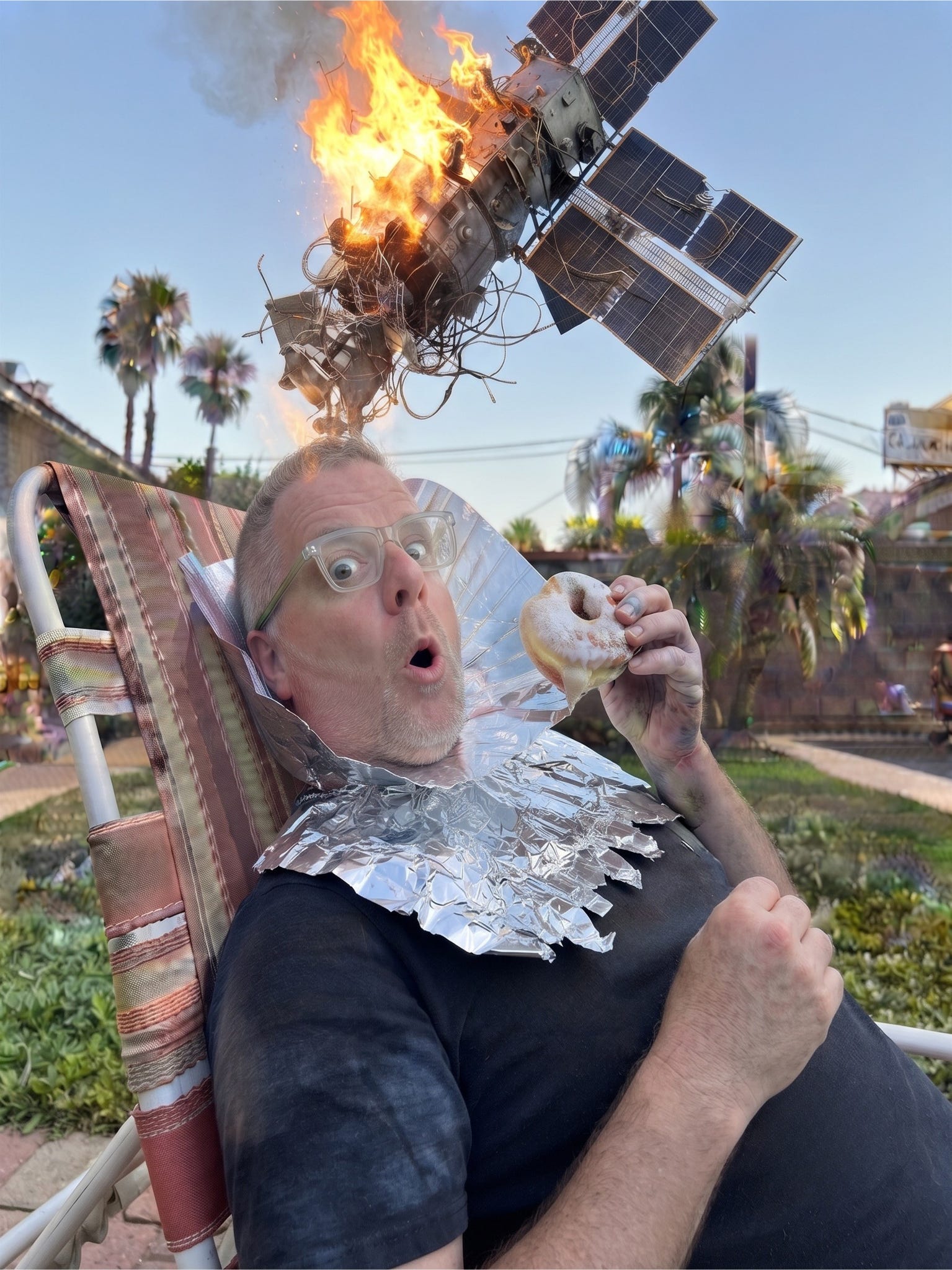
Whatever worldview I’ve got — for better or worse — it got forged in the emergency department. I spent my early twenties as a paramedic, which meant a professional education in exactly how people leave this world, whether I asked for it or not.
You learn fast, in that seat, that life isn’t a straight line toward a guaranteed destination. It’s closer to musical chairs — the music doesn’t really stop, but the chairs do, one by one, whether you’re paying attention or not.
As I get close to sixty, I think less about how the game ends and more about how I’ve been spending the time while the music’s still going.
We’re living through an era of manufactured anxiety. Worst news on the planet, in your pocket, refreshed every few seconds. Somebody gets flattened by a piece of space junk on the other side of the world and we know about it before dinner. We’re wired to survive, so we do the only thing that wiring knows how to do with information like that — we picture ourselves standing exactly where it landed.
We’ve gotten very good at fearing the space junk. Necks craned at the sky, scanning for the falling debris that might take us out. The freak accident. The headline. The random tragedy that makes the news precisely because it almost never happens.
And the whole time we’re staring at the sky, we’re stepping directly into the bus.
We’re so busy scanning for the space junk that we miss the ordinary risk quietly eating our healthspan. Terrified of the freak headline, reckless with the actual day-to-day habits that decide what the next decade looks like. We obsess over the one-in-a-million and ignore the boring, preventable stuff that’s actually doing the damage.
There’s an actuarial reality to turning sixty, and I know the math whether I like it or not. I’m fifty-nine now. Sixty next year. More years sit behind me than in front of me, and a smaller share of what’s left will be spent in the kind of health where it’s actually usable.
That’s not depressing to me. It’s clarifying. Closer to an audit of where the fear has actually been going.
If you’re playing musical chairs, you get to choose where the energy goes. Sky, waiting on a piece of space junk that probably isn’t coming. Or road — the sunscreen, the checkup, the sleep, all the unglamorous stuff that doesn’t make a good story because when it works, nothing happens. You don’t get to see the cancer that didn’t show up. The payoff is silence, and silence doesn’t compete with a headline.
The universe doesn’t care about any of our plans. That part’s just true. But I’m not indifferent to mine, and neither are you, probably, or you wouldn’t have read this far. We get some say in what we spend the worry on — the space junk we’ll almost certainly never meet, or the bus that’s actually coming down the street today.
I’m trying to look at the sky less. There’s a lot of road left to walk, and I’d rather be watching it.
Sean, from Slow Crossings.